Stop 8 · Buildings Walk
Synagogue
Jósika utca 10. · New Synagogue, 1903
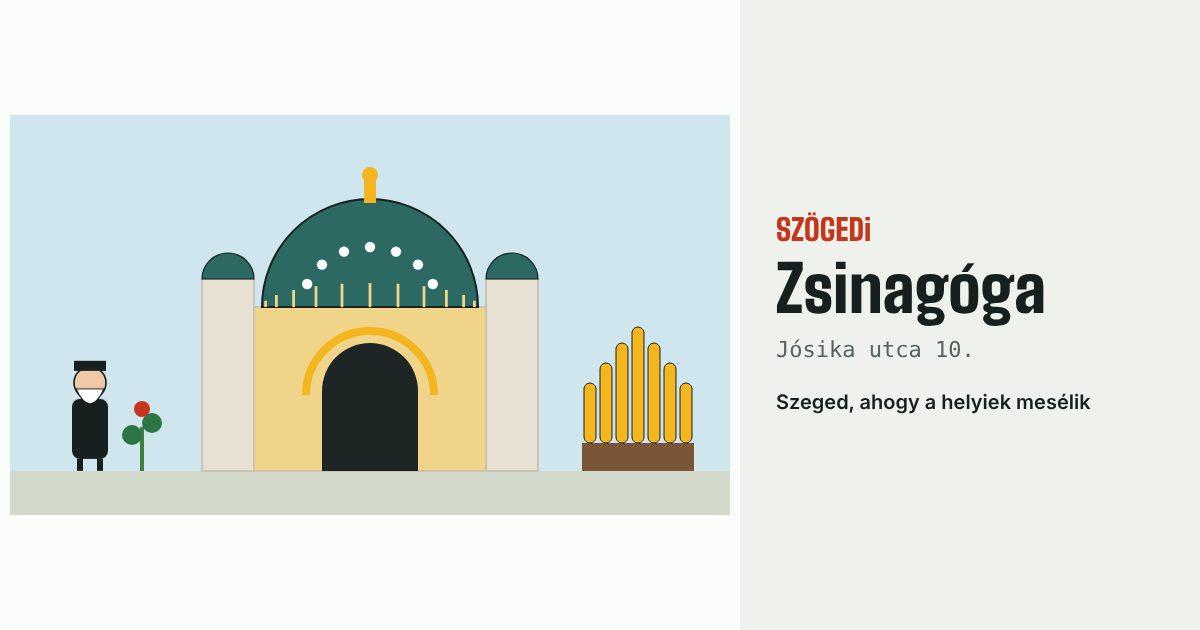
The dome symbolises the world, its 24 columns the hours of the day. The decoration was dreamed up by a botanist rabbi.
Built in 1903 to plans by Lipót Baumhorn, who designed 22 other Hungarian synagogues. It's Hungary's second-largest synagogue: about 49 metres high, with the dome rising 32 metres above the main hall. Many Hungarians call it the most beautiful synagogue in the world.
Chief Rabbi Immánuel Löw guided the design. He was also a scholarly botanist, author of the four-volume Die Flora der Juden, which is why the building is full of biblical plants, fruit and flower motifs.
The dome symbolises the world, the 24 supporting columns the 24 hours of the day, and the burning-bush flowers on a blue background faith. The stained glass comes from Manó Róth's workshop, the doors of the ark are acacia wood from the banks of the Nile, and the altar's closing stone is Jerusalem marble.
On the triumphal arch, in Hebrew and Hungarian: “Love your neighbour as yourself.”
In 1920–21 Immánuel Löw was imprisoned for 13 months over alleged statements against Horthy; in prison he kept working on his plant book. In 1944 Szeged's Jews were forced into a ghetto and then deported. The 90-year-old chief rabbi was put on a train too; he was rescued in Budapest but died that same year.
The organ has 2,317 pipes, and the acoustics are famous: concerts are held here today.
Open in the app →Animated scene, old photos, stamps and the full map. Free, nothing to install.Facts and labels
- True1903, Lipót Baumhorn, guided by Immánuel Löw.
- TrueHungary's second-largest synagogue.
- TrueThe 24 columns symbolise the 24 hours of the day.
- True“Love your neighbour as yourself”: in Hebrew and Hungarian on the triumphal arch.